
Scientific name
Ipomoea batatas (L.) Lam.
Kamote is a trailing food plant grown for its edible storage roots and tender leaves. Usually propagated from vine cuttings, it also features in Cebu’s binignit tradition.
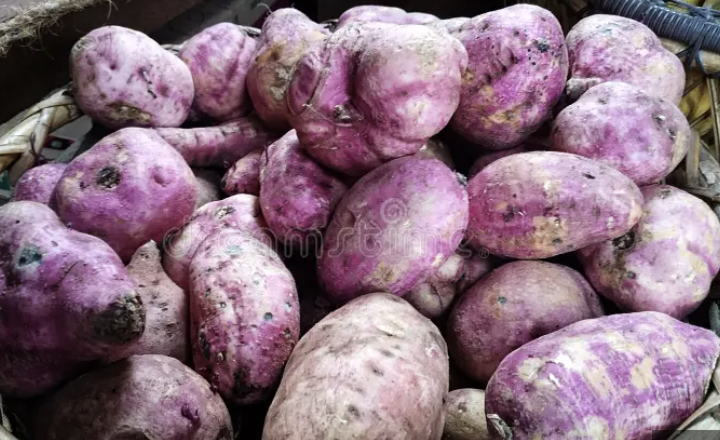
Researched species profile · Updated 14 September 2026. Local variety, sample measurements and farmer knowledge await documentation. Expert review is pending.
Kew records the native range as Mexico to Venezuela and Ecuador. Sweet potato is introduced in the Philippines; it is not a Philippine native species. [1]
Cultivated in the Philippines and many other tropical regions. In Cebu, kamote is documented among the foods sold at Carbon Public Market. This describes public distribution and use, not a verified collection locality for this accession. [1][6]
Kamote is an ingredient of binignit, the sweet coconut-milk dish associated with Holy Week in Cebu. A 2026 Philippine Information Agency report documents its sale with other binignit ingredients in Cebu City. [6]
A creeping perennial herb with stems that can root at the nodes. [2]
Leaves vary from broadly heart-shaped to distinctly lobed. Shape varies between plants and is not enough on its own to identify a named variety. [2]
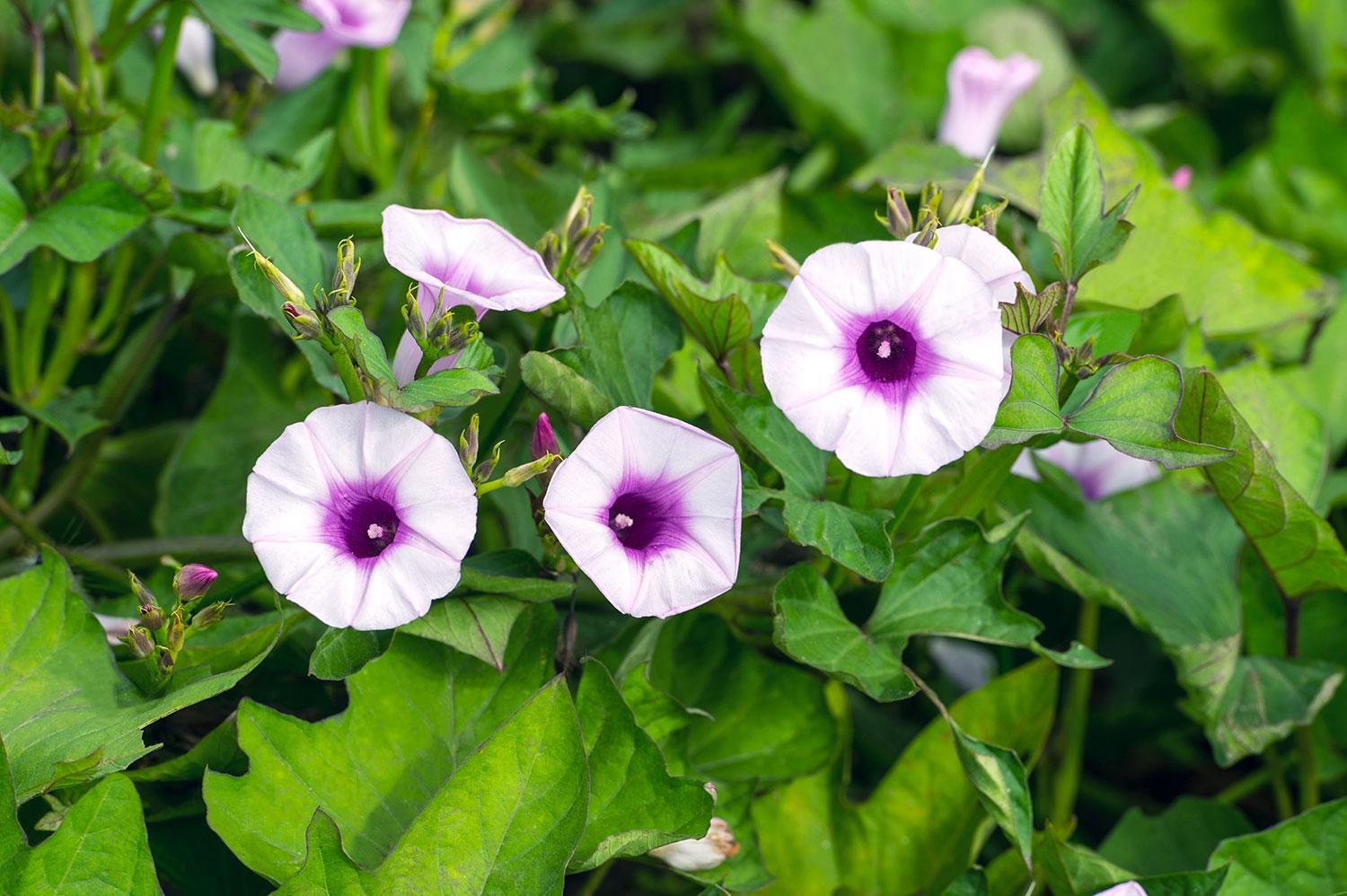
Funnel-shaped flowers are white to purplish and arise from the leaf axils. [3]
The botanical fruit is a small capsule, reported as 5–8 mm long, with one to four seeds; the edible underground part is a storage root, not a fruit. [3][4]
True seeds are black and have a hard coat. They are distinct from the vine cuttings commonly called “seed” in sweetpotato production. [3][5]
The swollen edible organs are storage roots. Sweet potato is botanically different from potato and from true yams. [4][2]
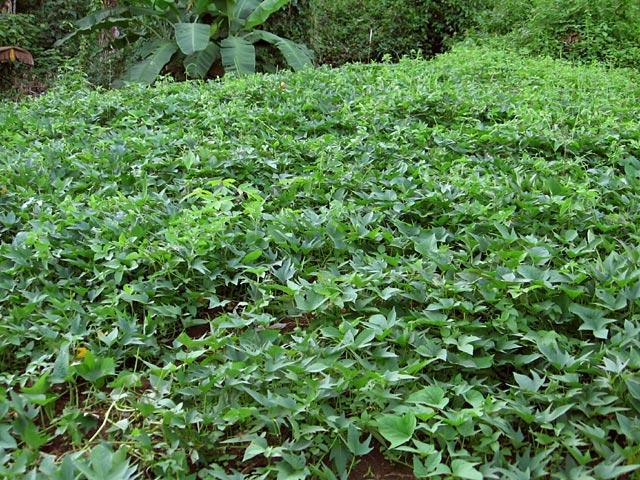
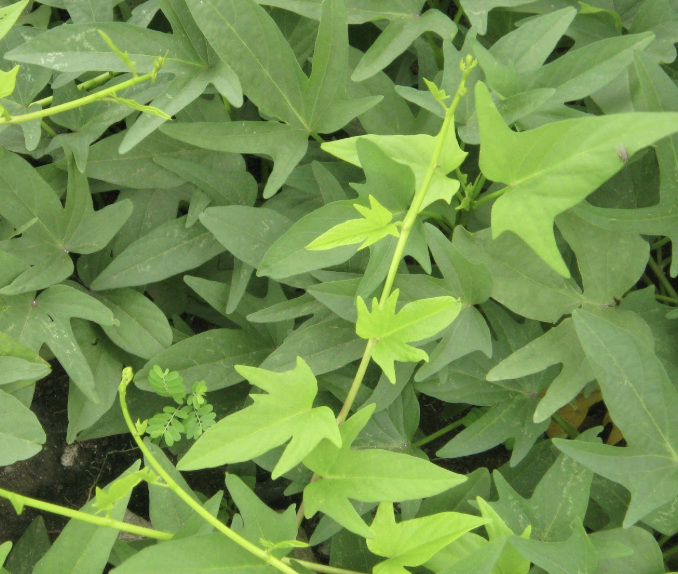
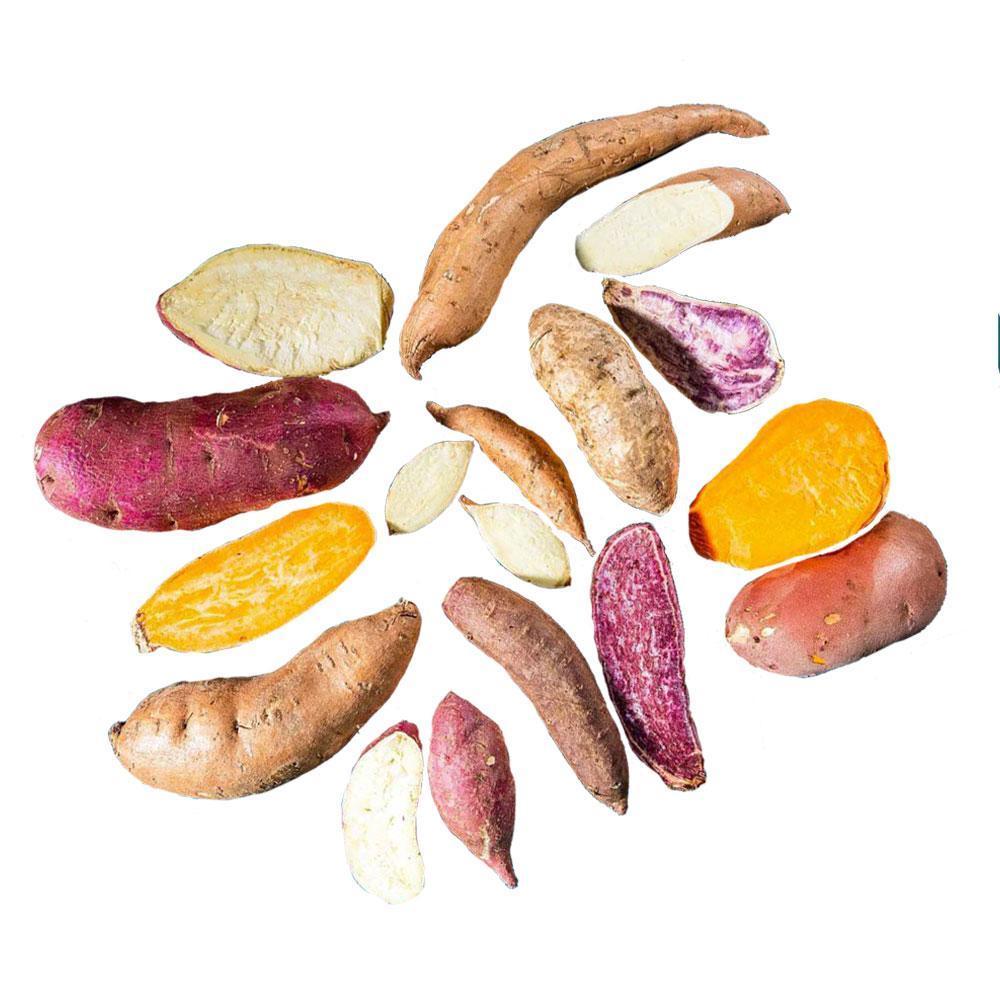
Vine cuttings are the usual planting material. Sprouts from storage roots can also be used; true seed is mainly used in breeding. [4]
JIRCAS describes botanical seeds as about 3 mm long. This is a published species description, not a measurement of this accession; its length × width × thickness remain unrecorded. [8]
No measured 100-seed weight is available for this accession. Not applicable to the vine cuttings described here.
Botanical seeds: black. This is a species description, not an observation of an archive sample. [3]
Botanical seeds are angular and somewhat flattened. This is a general description; an archive seed sample has not been examined. [9]
The botanical seeds have a hard coat; Kew describes them as hairless. [3][2]
A flowering dicotyledonous plant. Botanical seed and vegetative planting material should be recorded separately. [3]
Botanical germination is epigeal: the seed leaves emerge above the soil. A hard seed coat can make germination irregular. Routine crop multiplication instead uses rooting vine cuttings; no germination trial has been recorded for this accession. [7][4]
The source grower, collection date, named variety and sample provenance have not been supplied. No collection locality is inferred from the photographs.
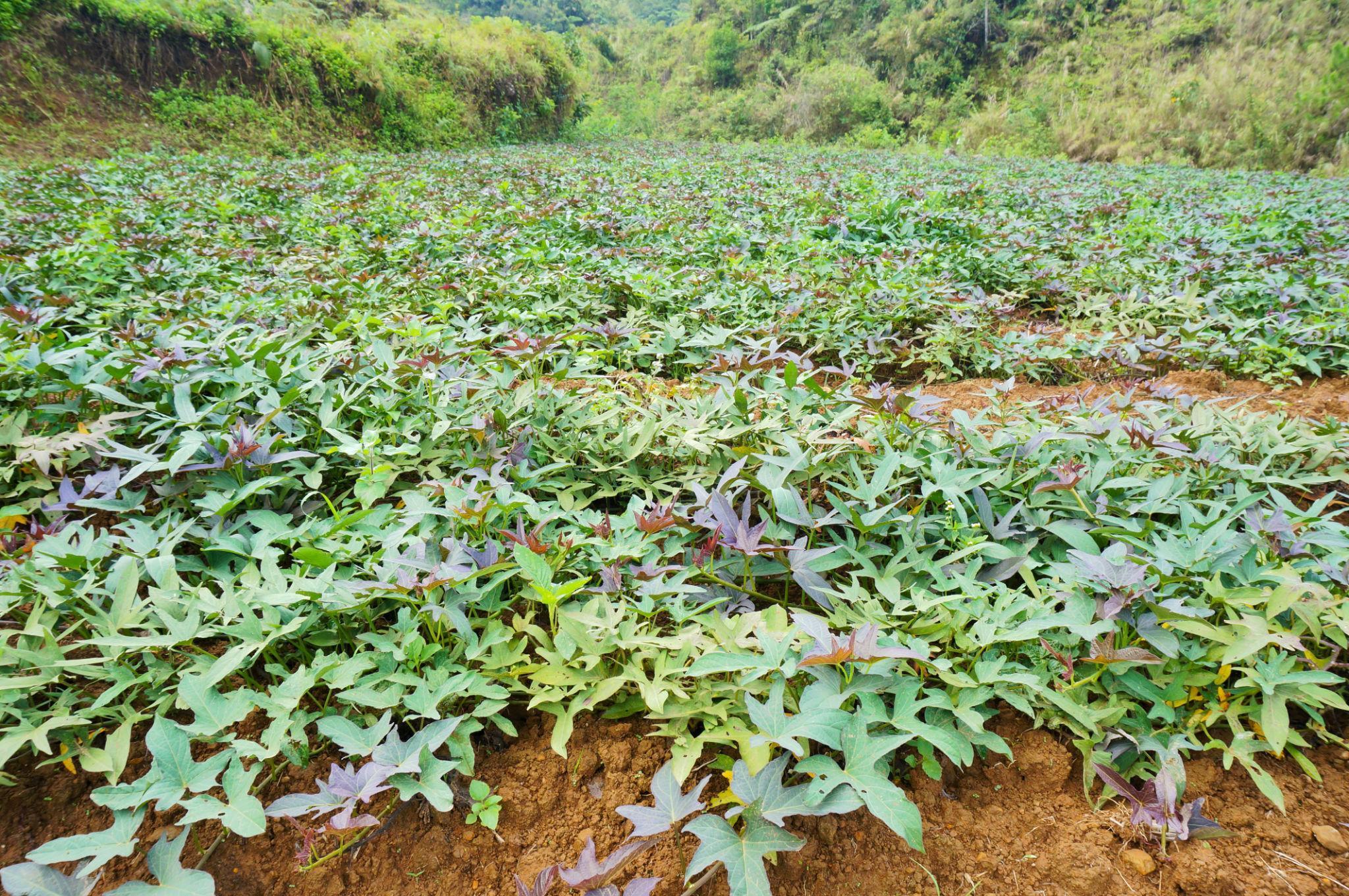
Use healthy vine tips with three or four nodes, approximately 20–30 cm long. Plant with two nodes beneath the soil. For an organic approach, use loose soil with compost or well-rotted manure, water to support establishment, and remove weeds by hand. This profile does not recommend synthetic fertilizers or pesticides. [5]
Choose a sunny site with well-drained soil and avoid waterlogging. CIP reports cultivation from sea level to about 2,500 m globally; this is not a measured altitude range for a Cebu accession. [3][4]
Flowers are bisexual and pollination is mainly carried out by bees. Cultivars differ in how freely they flower. These are species-level observations; no pollinator survey has been recorded for this accession. [10]
Select vigorous, healthy-looking vines, preferably clean planting stock. CIP recommends tip cuttings rather than the older, soil-adjacent portions, which are more likely to carry insect eggs or larvae. A healthy appearance alone does not establish pathogen-free status. [5]
Maintain clearly labelled living plants for future cuttings. Inspect and remove diseased stock. Where a dry season interrupts vine supply, CIP describes storing healthy roots in sand and sprouting them before planting time. Seek locally suitable guidance before adopting that storage method. [5]
Storage roots supply carbohydrate for energy. Orange-fleshed varieties contain beta-carotene, a precursor of vitamin A; this should not be assumed for every root color. Young shoots are also eaten. Composition varies, and this archive sample has not been analysed. [7]
A 2013 Cochrane review found insufficient evidence to recommend sweet potato preparations for type 2 diabetes. The reviewed preparations do not establish a medicinal benefit for this archive’s Kamote. This profile makes no disease-treatment claim. [11]
Roots can be boiled, baked or fried, and tender leaves cooked as a vegetable. In Cebu, kamote is included in binignit with coconut milk and other ingredients. [3][6]
Sweet potato is also used as animal feed and as a source of starch. These are documented species uses, not verified practices of a particular Cebu farmer. [3]
Farmer and grower contributions have not yet been documented for this profile.
Kamote connects a widely cultivated food plant with Cebu’s everyday food culture. Its edible portion develops below ground as a storage root, while the trailing shoots carry leaves that can also be cooked. Farmers commonly multiply sweet potato through vine cuttings, preserving a selected plant through vegetative propagation rather than sowing botanical seed. The species belongs to the morning glory family and has a native range in the Americas. Its presence in the Philippines reflects cultivation beyond that range. In Cebu, one documented connection is binignit: kamote joins other ingredients in the coconut-milk dish prepared during Holy Week. This archive profile brings together published botanical and cultivation information. It does not yet identify a verified local variety or document a particular grower’s planting material. Those details, along with measured seed samples and directly attributed memories or practices, remain opportunities for the Sugbo Seed team and its expert partners to complete. [1][4][6]